
TREATMENT INFORMATION
Foam sclerotherapy aims to close selected abnormal veins using an injected agent. Assessment in Samsun considers symptoms, vein anatomy and relevant ultrasound findings before a treatment plan is agreed.
What is foam sclerotherapy?
A sclerosant is prepared as foam and introduced into a selected vein to encourage closure. In suitable patients, blood returns through other functioning venous pathways.
The target is identified beforehand rather than treating every visible vessel. The circulation as a whole must be considered, including any relevant history of deep vein disease.
Which veins may be suitable?
Foam may be considered for selected superficial veins and tributaries, including some situations where thermal treatment is unsuitable. Diameter alone does not establish suitability.
The source of reflux, vessel course, previous procedures and clotting history matter. Different vessels in the same leg may need different approaches, and not all veins require intervention.
Assessment and ultrasound planning
Describe the duration of pain, heaviness, swelling or skin changes. Duplex ultrasound may be used to assess reflux and connections when indicated.
Provide a medication list and details of allergies, pregnancy, breastfeeding and previous thrombosis. Do not independently stop anticoagulants or other prescribed medicines; their management requires individual advice.
What happens during treatment?
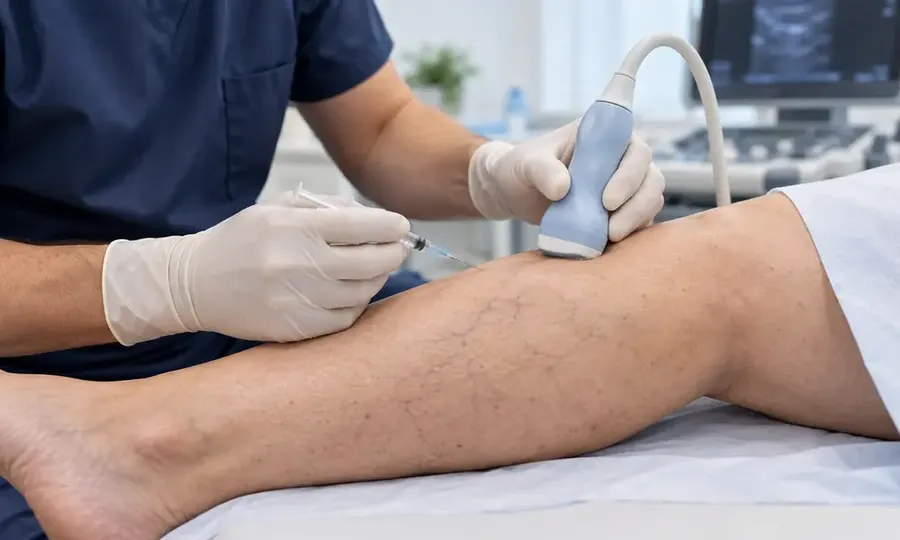
After identifying the target, the clinician plans the appropriate agent, concentration and amount. Ultrasound guidance may be used. Brief stinging or discomfort is possible.
The number of vessels and their characteristics affect the extent of a session. Activity, any compression and review are discussed afterwards. A universal session count or appointment duration cannot be promised.
Risks and expected changes
Bruising, tenderness, firmness, pigmentation and superficial inflammation can occur. Less common complications include allergy, deep vein thrombosis and transient visual or neurological symptoms. Discuss personal risks before treatment.
Visible change develops over time; immediate disappearance or a mark-free result cannot be guaranteed. Additional sessions or another approach may be considered after review.
Why follow-up matters
Follow the individual activity and compression instructions. Temporary firmness may occur, but worsening pain, new one-sided swelling or spreading redness needs assessment. Chest pain or breathlessness requires emergency attention.
Do not squeeze or vigorously massage treated veins. Review considers symptoms and ultrasound findings when appropriate, rather than appearance alone.
What does the foam target?
The foam brings a sclerosant into contact with the lining of a selected vein. The resulting process aims to close that vessel and reduce its prominence over time. Closing a target is not the same as stopping circulation throughout the leg.
However, superficial and deep venous drainage must be considered before deciding which vessel can be treated. Previous thrombosis or significant venous disease makes understanding these relationships particularly important.
When is ultrasound guidance used?
The entire course and deeper connections of a vein may not be visible at the skin. Ultrasound helps identify the target and its relationship to the procedure, particularly for larger vessels or those running beneath the surface. Guidance does not eliminate risk; assessment, dose planning and follow-up remain necessary.
Nor does every small surface vessel require the same extent of imaging. The clinical findings determine what information is needed.
How are tenderness and firmness assessed?
A treated vessel may temporarily feel like a firm line beneath the skin, and local bruising or tenderness can occur. Whether this fits the expected course depends on extent and how it changes over time. Increasing pain, new swelling affecting the leg or spreading redness should not simply be labelled healing.
Do not puncture, squeeze or vigorously rub the vein at home. Follow the instructions provided and seek assessment for concerning changes.
When does appearance change?
The appearance immediately after foam does not establish the final response. Pigmentation or a more noticeable firm vessel may temporarily complicate interpretation. The pace of change can depend on vessel characteristics, treatment extent and individual tissue response.
A fixed day by which every vein disappears cannot be promised. Review considers symptoms such as aching and heaviness, with ultrasound findings when indicated, rather than relying only on photographs.
Can foam be combined with another method?
In some patients, reflux in a superficial trunk and visible tributaries are considered within the same plan. Foam may be one component, but not everyone needs several procedures. Assessment determines priorities and whether approaches are combined or staged.
The aim is a clear clinical reason linking the venous findings to the proposed intervention, rather than increasing the number of treatments. Discuss what each component is expected to address.
Does recurrence change the approach?
New vessels or reflux in another vein may become apparent after previous treatment. The earlier method should not automatically be repeated without reassessment. Previous reports, the technique used and the course of symptoms are relevant.
Current anatomy determines whether foam is suitable. A newly visible vein alone does not prove that the earlier procedure failed or that another intervention is necessary. Goals and alternatives should be reconsidered in the present clinical context.
Can appearance alone establish the diagnosis?
A visible vessel does not by itself establish clinically significant venous insufficiency or a need for treatment. Conversely, heaviness and swelling can occur without prominent surface veins. Assessment combines the onset and pattern of symptoms, their relationship to standing and examination findings.
Muscle, joint or nerve conditions can also cause leg pain, so treating visible veins may not address every complaint. The source of symptoms should be considered before any procedure.
What history should be discussed?
Previous thrombosis, vein surgery and injection procedures can influence a new plan. Share the current medication list, allergies, other illnesses and mobility limitations. Pregnancy and breastfeeding need specific consideration when discussing timing and method.
Do not stop an anticoagulant or any other prescribed medicine based on an online description. Earlier ultrasound reports may support comparison, although the clinician may decide that updated imaging is appropriate for the current question.
What should be discussed before deciding?
Discuss the target vessel, the intended benefit and the symptoms the procedure may not explain. Options can include observation or another technique, depending on the findings. Anaesthesia, possible complications, review and additional sessions should form part of the conversation.
Informed consent is based on an individual assessment rather than a standard online description. Take time to clarify uncertainties, including what may happen if intervention is deferred and how symptoms will be monitored.
Movement and longer-term monitoring
Calf muscle activity supports venous return. Walking appropriate to general health and breaking up prolonged stationary periods may help symptom management. These habits do not correct every incompetent valve or guarantee that new veins will never appear.
Aftercare depends on the method, mobility and occupational demands. Later symptoms may require reassessment rather than automatically repeating the same procedure. Discuss how progress will be judged and which changes warrant an earlier review.
Frequently asked questions
Will one session be enough?
Some veins respond to one session, but extent and review findings may justify further treatment.
Is foam the same as liquid sclerotherapy?
Both are forms of sclerotherapy; preparation and the target vessels can differ.
Can new veins appear later?
Yes. Treating selected vessels does not remove every future tendency to develop varicose veins.
Content / editor contact