
TREATMENT INFORMATION
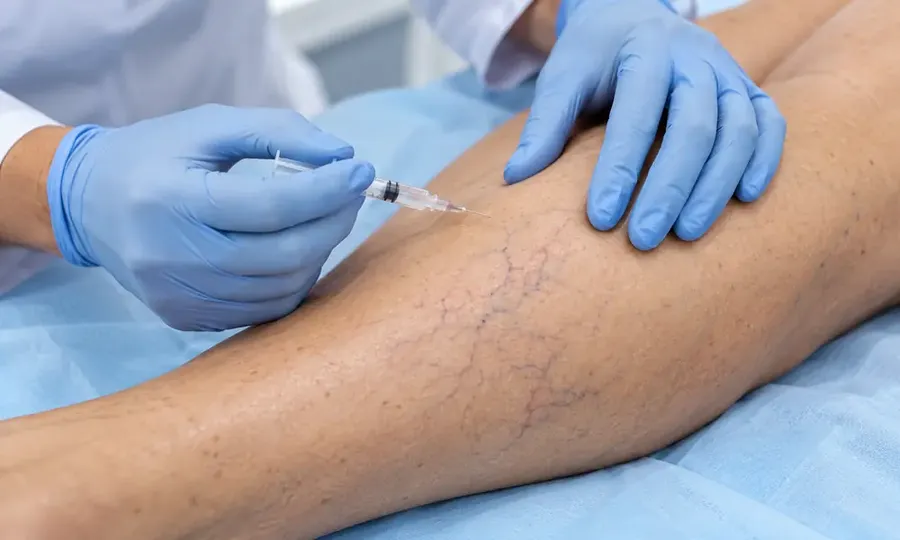
Sclerotherapy uses an injected agent to treat selected superficial veins. Choosing liquid or foam depends on vessel anatomy, connections and the patient’s medical history.
What is sclerotherapy?
A sclerosant is injected into a target vein to encourage controlled closure and gradual reduction in visibility. This does not repair a damaged valve to its original state.
Planning considers how other veins provide drainage. Colour alone does not establish suitability, and treating a surface vessel should be considered in the context of the venous circulation.
Liquid and foam approaches
The agent may be used as a liquid or prepared as foam. Liquid can be considered for selected small surface vessels, while foam may be considered for other suitable veins.
Each preparation has its own suitability considerations. Foam treatment is a form of sclerotherapy rather than an entirely unrelated procedure, and neither is appropriate for every patient.
When is assessment useful?
Spider veins, reticular networks and selected tributaries may be assessed. Associated swelling, pain, skin changes or larger veins can require broader evaluation.
Duplex may be indicated to investigate reflux. When seeking sclerotherapy in Samsun, establish the cause of symptoms rather than assuming small visible vessels explain every episode of leg pain.
Preparation and session planning
Discuss allergies, thrombosis, pregnancy, breastfeeding and medicines, along with responses to earlier treatment. The agent and preparation are chosen after defining the target.
Extent varies between individuals, and widespread veins may be addressed in stages. Follow-up findings help determine the next step rather than assuming all areas should be treated during one appointment.
Appearance and possible adverse effects
Bruising, tenderness, firmness and pigmentation may occur. New fine vessels, superficial inflammation, allergy and less common serious complications should also be discussed.
Foam adds considerations such as transient visual or neurological symptoms. Improvement takes time, and additional sessions may be needed; immediate disappearance without marks cannot be promised.
Aftercare and review
Advice on skin irritation, sun exposure, movement and any compression depends on the procedure. Review addresses symptoms as well as appearance. New unilateral swelling, increasing pain or spreading redness needs assessment.
Chest pain and breathlessness require emergency help. The response of treated vessels and the later development of new veins are separate issues.
Is diameter sufficient for planning?
Diameter contributes to planning but does not decide suitability by itself. Depth, connections with feeding vessels, distribution and symptoms also matter. Two vessels that appear similar in size may occur in different clinical settings.
With swelling or larger associated veins, focusing only on the appearance of small vessels may miss relevant findings. Examination determines whether further investigation is needed and which question that investigation should answer.
Assessing feeding vessels
Fine networks may connect with more noticeable reticular veins beneath the skin. Focusing solely on surface lines may overlook these relationships. Planning should explain which vessels are targeted and why.
A staged approach may be considered for some patients, but no sequence applies universally. Extent and session planning may be reviewed as the vessels respond. The aim is an anatomical reason for each step rather than treating every visible line at once.
What might be felt during injection?
Needle entry and the injected agent may cause brief stinging, burning or discomfort. Technique, area and individual sensitivity affect the experience. Report unusual or increasing symptoms during the procedure.
General statements about comfort should not be taken as a promise that nobody feels pain. Anaesthetic needs and monitoring depend on assessment and the technique used. Understanding these possibilities beforehand supports a more informed discussion of expectations.
Pigmentation and fine new vessels
Brownish pigmentation or fine new networks may appear in a treated area. Duration and prominence vary. Advice on sun protection and skin care depends on the method.
Appearance during the early weeks cannot by itself establish a permanent outcome. Persistent or increasing changes deserve review to consider whether monitoring or another approach is appropriate. Comparing progress with unrelated photographs does not replace examination of the actual skin and vessels.
How are session intervals chosen?
Observing the initial response and reviewing temporary effects helps guide another session. A fixed interval and total count should not be applied to everyone. Vessel distribution, preparation, extent and skin response matter.
A review does not exist solely to arrange more treatment: it may show that no additional procedure is needed or that another option should be considered. The intended goal should remain clear throughout the process.
When might surface laser be discussed?
Surface laser may be considered for very small vessels or some circumstances in which sclerotherapy is unsuitable. Targets, adverse effects and skin considerations differ between methods. Neither is a universal choice for every vessel or skin characteristic.
Previous procedures, allergy history and current anatomy matter. Switching or combining approaches requires these individual details rather than an assumption that one technique is always stronger or preferable.
Can appearance alone establish the diagnosis?
A visible vessel does not by itself establish clinically significant venous insufficiency or a need for treatment. Conversely, heaviness and swelling can occur without prominent surface veins. Assessment combines the onset and pattern of symptoms, their relationship to standing and examination findings.
Muscle, joint or nerve conditions can also cause leg pain, so treating visible veins may not address every complaint. The source of symptoms should be considered before any procedure.
What history should be discussed?
Previous thrombosis, vein surgery and injection procedures can influence a new plan. Share the current medication list, allergies, other illnesses and mobility limitations. Pregnancy and breastfeeding need specific consideration when discussing timing and method.
Do not stop an anticoagulant or any other prescribed medicine based on an online description. Earlier ultrasound reports may support comparison, although the clinician may decide that updated imaging is appropriate for the current question.
What should be discussed before deciding?
Discuss the target vessel, the intended benefit and the symptoms the procedure may not explain. Options can include observation or another technique, depending on the findings. Anaesthesia, possible complications, review and additional sessions should form part of the conversation.
Informed consent is based on an individual assessment rather than a standard online description. Take time to clarify uncertainties, including what may happen if intervention is deferred and how symptoms will be monitored.
Movement and longer-term monitoring
Calf muscle activity supports venous return. Walking appropriate to general health and breaking up prolonged stationary periods may help symptom management. These habits do not correct every incompetent valve or guarantee that new veins will never appear.
Aftercare depends on the method, mobility and occupational demands. Later symptoms may require reassessment rather than automatically repeating the same procedure. Discuss how progress will be judged and which changes warrant an earlier review.
Frequently asked questions
Can spider veins be treated?
Selected vessels may be suitable. Vessel and skin characteristics guide the approach.
Is foam different from sclerotherapy?
Foam is a form of sclerotherapy; liquid or foam is chosen according to the target.
How long does pigmentation last?
Its course varies. Discuss the risk beforehand and have persistent or worsening changes reviewed.
Content / editor contact