
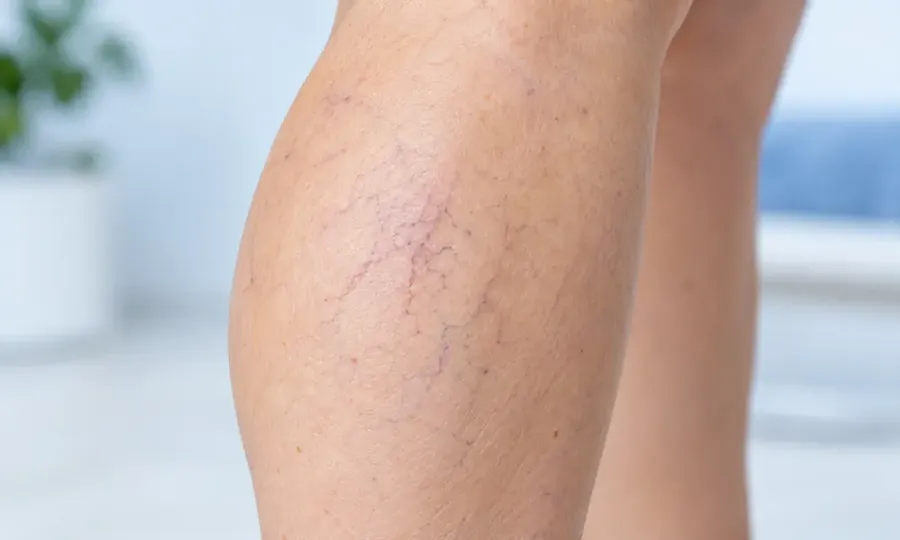
VARICOSE VEIN INFORMATION
Skin characteristics, vessel distribution and realistic expectations matter alongside technique. Understanding the process helps make sessions and follow-up clearer.
Assessment first
Fine red and purple leg vessels are often called spider veins or telangiectasias. Although appearance is a common concern, accompanying pain, swelling or larger veins may require a broader assessment.
Choosing a method
Sclerotherapy aims to close selected vessels with an injected agent. Surface laser may be considered for very small vessels or when injection treatment is unsuitable. Surface laser differs from catheter-based endovenous laser treatment.
Expectations and risks
Visible improvement develops over time and several sessions may be needed. Bruising, tenderness, pigmentation and fine new vessels can occur. Individual risks and less common complications should be discussed before treatment.
Follow-up
Skin protection, activity and any compression advice depend on the procedure and patient. New veins can appear later. Anyone researching spider vein treatment in Samsun should discuss suitability and realistic expectations during assessment.
Setting realistic expectations
Initial extent, vessel connections and skin response can influence the visible result. Different areas may improve at different rates.
Early bruising or pigmentation should be interpreted in the context of recovery rather than immediately labelled treatment failure. Before a procedure, ask when progress will be assessed and when another session might be considered.
Surface and endovenous laser are different
Surface laser directs energy through the skin towards small superficial vessels. Endovenous laser uses a catheter within a selected larger vein.
These procedures differ in their target, preparation and follow-up even though both use laser energy. Ask which technique is being discussed and why it matches the vessel being assessed.
Supporting skin recovery
Follow the advice given for sun exposure, heat and products that could irritate the treated skin. Activity and compression recommendations depend on the method and individual circumstances.
Follow-up also provides an opportunity to review persistent tenderness or pigmentation. Response of treated vessels and the later appearance of new veins are separate issues.
Frequently asked questions
Will one session remove every spider vein?
A fixed session count cannot be promised. Extent, anatomy and response may lead to further treatment.
Are all vein laser procedures identical?
No. Surface laser for small vessels differs from catheter-based endovenous laser inside a larger vein.
Can new spider veins appear later?
Yes. Treating selected vessels does not remove every future tendency to develop new ones.